Note to Self: Next Time, Wear Gloves

Do you know what is the shortest measurable time period known to humans?  Are you thinking millisecond?  Nanosecond?   Nope, you’d be wrong.  It’s the length of time needed for a contentedly purring feline to transform into a hissing hellcat that scratches your hand. 

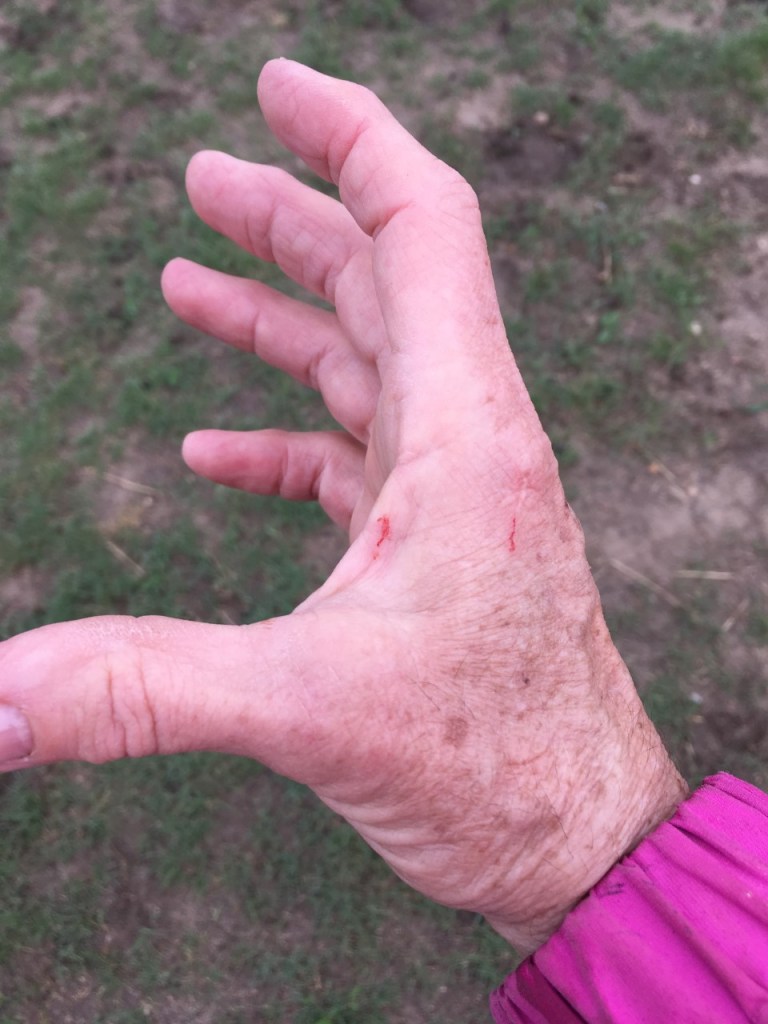
The photo you see below is a photo of my hand after an encounter with Simba, one of our two barn cats.  Before I describe the encounter, let me give you a little background on my experiences with cats.
Remember the movie 101 Dalmations with dogs running and leaping, coming out of every nook and cranny? Well, if you replaced each one of those cute, furry, spotted puppies with a mostly feral, shaggy, yellow tabby cat, that is what our barn looked like when I was growing up in the Sixties.  Back then, we didn’t bother with spaying, neutering or vaccinating barn cats.  If Frontline or Heartgard existed back then, we certainly didn’t know about it, and wouldn’t have spent money on it if we had.

Our multitude of farm cats lived wild, lived free, and – in return for shelter and a daily feeding – they kept our many farm buildings clear of mice, rats, and other undesirables. 

But let me make this very clear – they were not friendly, and they were not pets.  If we kids discovered, hidden among the hay bales, a new batch of kittens before their eyes were opened (and if the mother were not around!) we could hold and cuddle them.  But once their eyes were opened and the kittens were mobile, they hissed, bit, and scratched just like their elders.

I loved our dogs; I tolerated our cats.

And then…Jack entered our lives. 

Jack, ironically enough, was also a yellow tabby.  I talked Danny into getting a cat in 1991 after we moved into a new house in town directly off a golf course.  Rodents coming off the course were a real nuisance and I knew the right cat could take care of that problem.  Jack was more than I could have ever hoped for.  Not only did he take care of our home and property, he taught me that cats could be just as lovable as dogs – but with a personality entirely unique to cats.

Jack was a badass.  And I say that with the utmost admiration.  A Clint Eastwood type of badass – cool as a cucumber, quiet, calculating, and he always got his man.  Yet, just like Clint, he sometimes displayed evidence of a softer side that could almost be described as sweet.

One summer day, my niece stopped by our house with Tuffy, their family dog.  A cockapoo, Tuffy was sweet-tempered, smart as a whip, but evidently, inappropriately named.   While my niece and I were chatting on our driveway, Tuffy began barking furiously as Jack crossed the driveway towards us.  Tuffy approached Jack and began circling him, barking constantly.  Jack ignored Tuffy as he nonchalantly strolled ever closer to us.  Tuffy was now emboldened.   His circles grew smaller, and his barking grew ever more ferocious until Jack stopped, only a few feet away from us.  Tuffy was now barking within inches of Jack’s face.  Jack’s eyes narrowed to slits, and then…

Remember that time period I mentioned in the first paragraph?  Like greased lightning, Jack swiped his paw across Tuffy’s face.  Tuffy let out a yip! thenleaped vertically into my niece’s arms!  Even LeBron would have been impressed with Tuffy’s vertical leap.  Luckily, my niece’s reflexes were also cat-like, and she caught Tuffy before he fell back onto the driveway.  Tuffy stayed in my niece’s arms for the rest of the visit. 

Meanwhile, Jack casually continued his jaunt across the driveway into the sunset, tail held high.  Badass.

Unfortunately, Jack died of old age before we ever moved to the farm.  As soon as we got our barn built, Danny and I both agreed we needed another cat.

Enter Sherlock.  A gray tabby, I got Sherlock from the Humane Society where he had been appropriately vaccinated and neutered, 21st century-style.  Sherlock, we soon discovered, was more affectionate and sensitive than Jack had been, turning out to be more of a Tom Hanks kind of cat.  He loves adults, leaping with no warning into any suitable, available lap.  He loves kids, even those who squeeze a bit too tight, or love a bit too much.  He even loves our other farm animals, and is often seen rubbing against the horse’s legs and snuggling with our dogs.
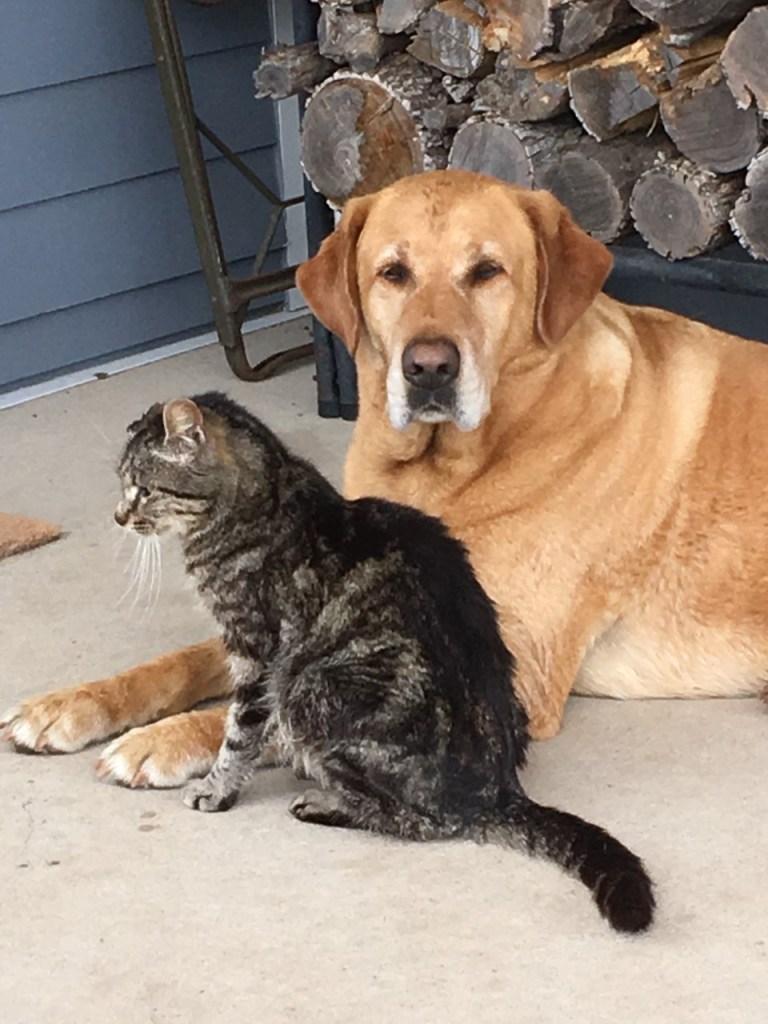
Unfortunately, Tom Hanks isn’t really known for always getting his man.  When I witnessed Sherlock sitting quietly, detachedly observing as a mouse ran between his legs, (Yes!  Between his legs!) I realized that we really needed someone more like Clint back at the ranch.

Instead we got Simba.  A once-feral cat, Simba came to me via our vet, who had planned to take him to his own farm rather than euthanize him.  Also appropriately vaccinated and neutered, Simba is smarter than the inbred cats from my childhood, more ruthless and unpredictable than Jack had been, and more of a hunter than Sherlock.  But the line between good and evil is sometimes blurred with Simba.  He is definitely more the Al Pacino type.

Simba, Danny and I have reached a mutual, legally-binding agreement.  He shall catch unwanted mice, and in return we shall feed him and provide shelter.  He shall not, however, be expected to offer any snippets of affection.  If any human and/or feline interaction is desired, we shall each be referred to Sherlock (who loves everyone). 
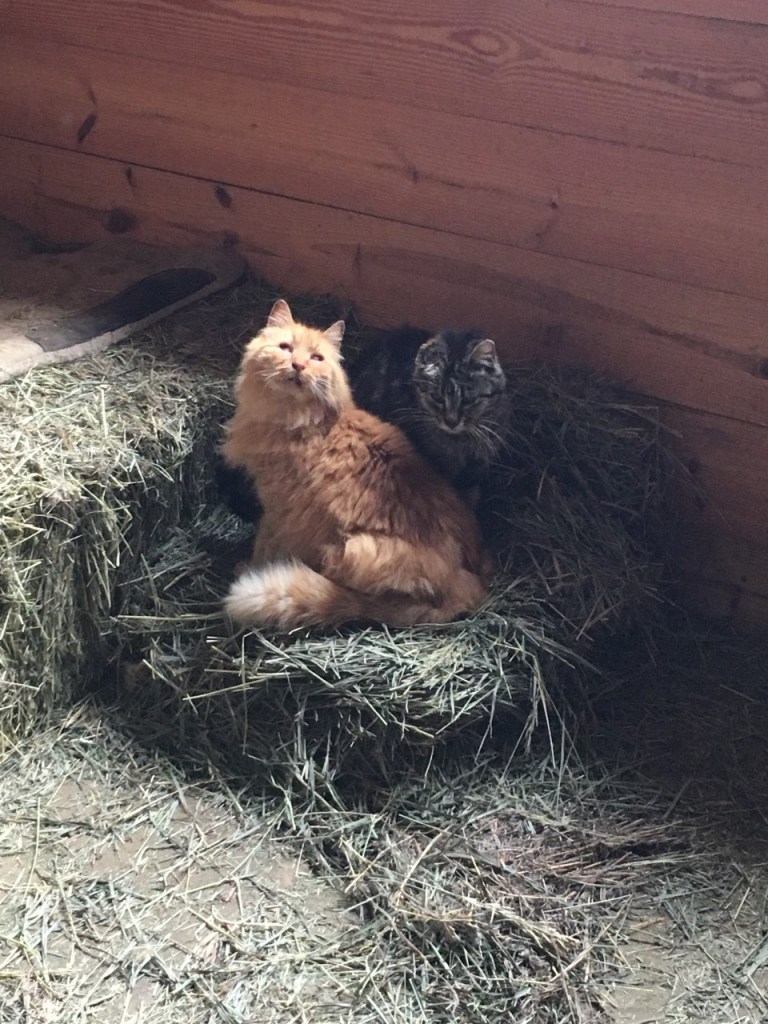
This works really well for about eleven months out of the year.  The problem is, Simba has long hair.  He is beautiful in winter, and I can’t help but admire him (from a safe distance).  But in spring, when he starts to shed, his coat gets these gigantic clumps and he simply can’t manage his own grooming.  The poor cat looks miserable.

So, for the past few years, I have started grooming him in the spring.  Believe me when I tell you, I did this very carefully at first.  But then I realized that he kind of likes it!  That is, until he doesn’t. 

And there you have it.  Now you understand the genesis of my hand scratches.  I know it doesn’t look like much.  But it stung – my feelings more than anything, I guess.

I think I need a snuggle with Tom Hanks.

(Oh, I have more “Jack” and “Sherlock” stories! Read the May chapter in my third book, The Return to the Family Farm.)

Next Week:  No Humor Today
Hey! That’s My Hat!

In previous blogs, I have written about Zip’s propensity for growing a thick winter coat and about how special BB is, but I have yet to tell you much about BJ, the youngster in the herd.

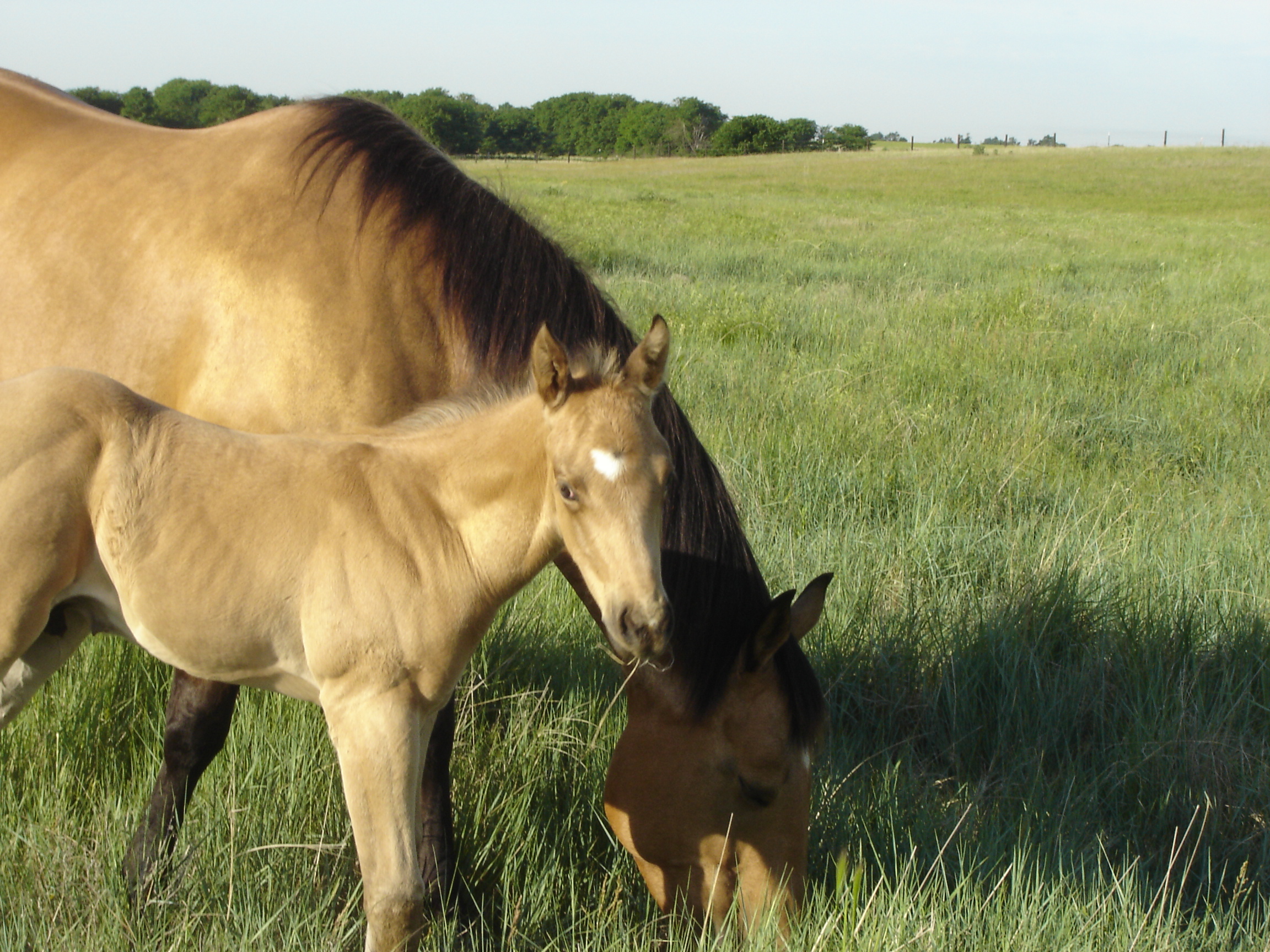
BJ is the only one of our three horses who has never known an owner besides me.  And he never will.  I promised BB before I had her bred that if she did this for me, she would have her foal beside her always.  I try very hard to always keep my promises.

The foal was due around the same time that our second granddaughter was due.  My daughter-in-law asked me point blank one day, if both babies were born at the same time, which would I choose to be present for?

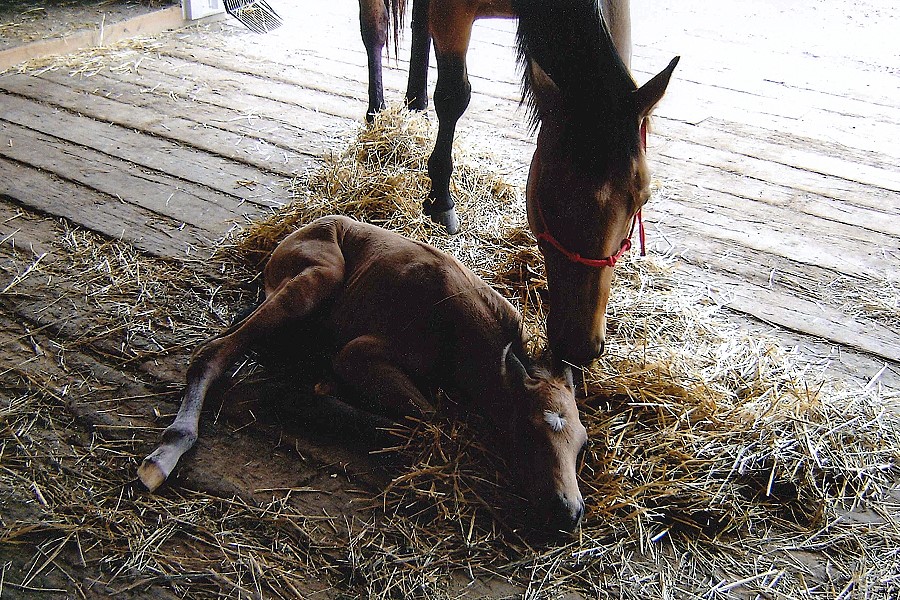
Thank goodness I didn’t have to choose.  I was present for both.  BJ was born first on May 14, 2009, and our granddaughter arrived on May 29.  It was a very good year.

BJ was born in our corral, about mid-morning.  Danny and I were both present.   I had been watching BB closely, and when she couldn’t seem to make much progress, I called the vet.  He ended up having to pull BJ.  Now, just so you know, our vet is not a small man.  In fact, in another life, he could probably have been a lineman for the Kansas City Chiefs.  He struggled to pull BJ, and, after the birth, told me that BJ looked like a month-old foal.

BJ is still huge.  The average height of a quarterhorse is 15 hands, or 60 inches (one hand = 4 inches) from hoof to withers (highest point of the front shoulder).  BJ is 16 hands high, or 64 inches.  That is actually the average height of a thoroughbred.  But BJ is not slender like a thoroughbred.  He has the thick, muscular features of the quarterhorse.  So, bottom line, I always get the feeling when I’m riding him, that if he really wanted to, he could toss me like a rag doll.

But honestly, BJ is pretty darn sweet.  And he is beautiful.  Really.  A creamy buckskin with thick, wavy black mane and tail.  His maternal grandsire was a racehorse, and his paternal grandsire was an award-winning showhorse.  He is a sight to behold as he races through the pasture.

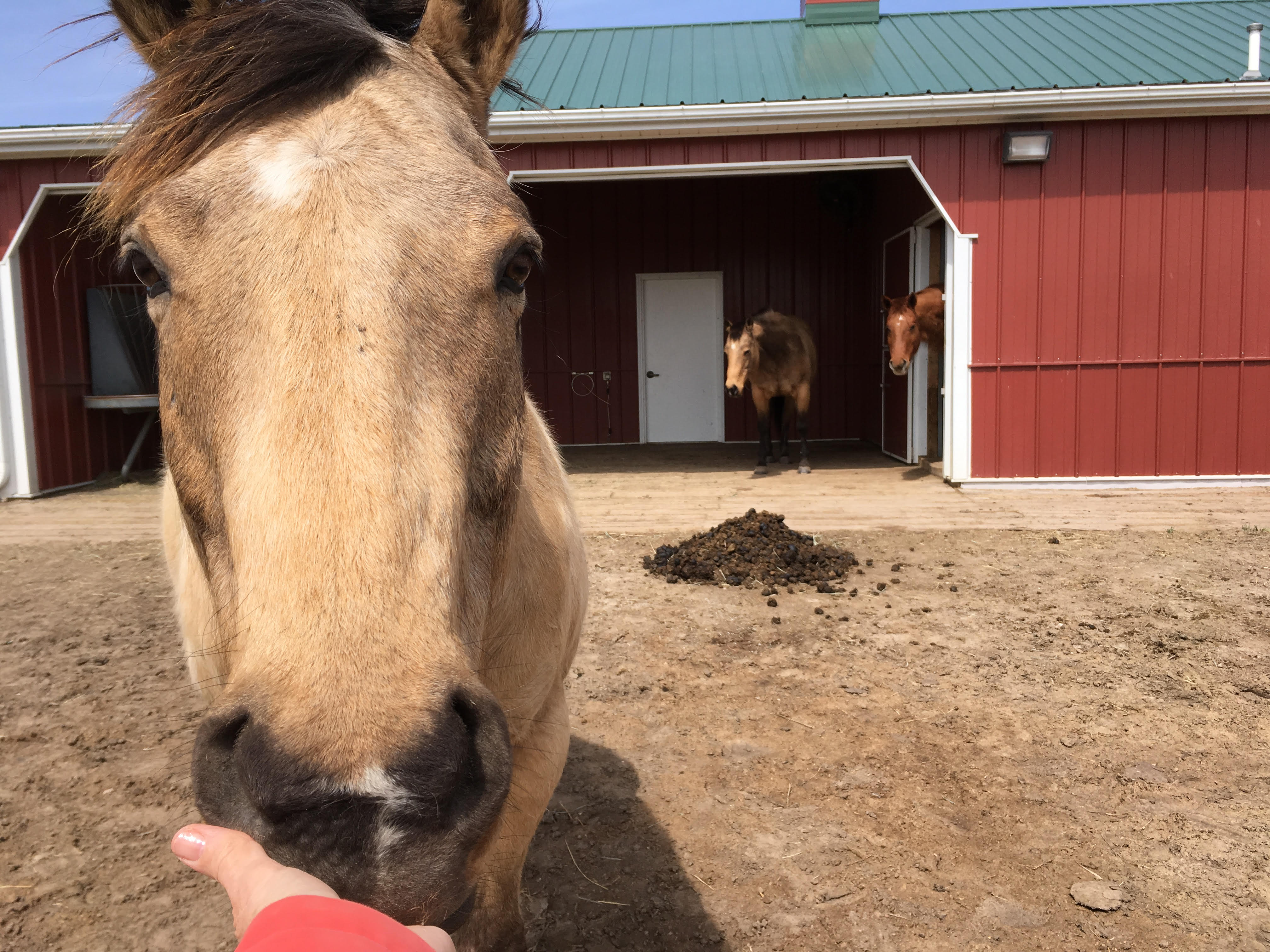
It is his personality, however, that I love most.  BJ talks to me.  When I call the horses, he is the one who answers back.  When I come out of the house and walk towards the corral, he is the one who nickers in anticipation and greets me at the gate.  

He is still trying to establish his place in the herd.  Zip will calmly put up with BJ’s ear-flattening, tail swishing and foot stomping for a while, but will eventually get fed up with it.  Clearly not intimidated by BJ’s size, Zip will flatten his ears, bite BJ on the shoulder or rump, and quickly put the youngster back in his place.  BJ’s constant testing of boundaries reminds me of some other young males who used to live in our household.

BJ is funny.  He’s my corral clown.  If I laugh out loud at one of my horses, it is always BJ.  One day I got a facetime call from my grandkids while I was in the corral with the horses.  As I was holding the phone, talking to the kids, BJ came up behind me, put his head on my shoulder and watched the phone.  He was so curious!  He sniffed the phone and put his lips on it, trying to figure out how those tiny people got into that small box!  On their end, the grandkids were seeing huge nostrils, a huge tongue, and huge teeth.  They thought it was hilarious.

But in my opinion, the funniest thing BJ has ever done involved my new hat.

Normally, I wear a large-brimmed straw hat when working outside.  But if it’s rainy, I have a water-proof hat that I wear instead.  That hat is a cobalt blue.  Now, I am convinced that horses can see some form of color.  It may not be exactly what we humans see, but my experience is that they respond to color.

For instance, before we moved back to the farm, I boarded BB in town very near our home.  As I rode her around the area where she was boarded, she would stop at every newspaper holder in front of the neighborhood homes.  She ignored the mailboxes, but was fascinated by the plastic newspaper holders.  She sniffed them, licked them, and I generally had a difficult time pulling her away from them.  It suddenly dawned on me.  They were all green!  The same green color as her grain bucket.

Back to the blue hat.  BJ noticed it.  As I was sweeping and shoveling that day, he kept crowding me, sniffing and nibbling at my new, out-of-the-ordinary, blue hat. 

I pushed him away.  “Get out of here.  I’m busy,” I told him.

He persisted.  He grabbed at the brim of the hat with his teeth. 

I waved him off.  “Quit it, BJ!  Leave my hat alone.”

The hat had a chin strap which I had tightened under my chin.  He again grabbed the brim with his teeth, pulled up, and almost guillotined me. 

I gave up.  “Fine!  You want my hat so bad?  Here, take it!”  I took the hat off, placed it on the top of his head between his ears, and wrapped the chin strap around his ears so that it would not slip off.

I honestly thought he would try to shake it off.  He did not.  Instead, he paraded around the corral, head held high like an ingenue balancing a book on her head at Miss Priss’ School for Young Girls.

I laughed at his silliness, but he didn’t care.  He stood and posed as I took his photo.  He continued to wear it the entire time I did my chores.  Not once did he try to shake it off. 

When I finally took my hat back, he let me.  He had accomplished what he had set out to do.  For a while, it had been his hat.

(Growing up, my horse’s name was Strawberry.  Read all about her in July – The Filly in A Year on the Family Farm and August – The Secret in Another Year on the Family Farm.)

Next Week:  Note to Self:  Next Time, Wear Gloves

Ouch!

Our two sons were born in 1981 and 1984.  At that time, new mothers were strongly encouraged to attend Lamaze classes to learn natural birthing techniques.  Danny and I attended faithfully for weeks, never missing a class.  I learned how to breathe (Deep breath in through the nostrils, exhale slowly through the mouth.  Deep breath in…) while he learned how to soothingly wipe my forehead with a cool, damp washcloth.  (Okay, there were a few other details we both learned, but those are pretty much the highlights.)

Anyway, towards the tail end of my first labor, the cool, damp washcloth on my forehead no longer soothed me.  In fact, it began to have the opposite effect.  Danny swears to this day that my normally baby blue eyes turned a reptilian yellow as I grabbed his wrist in a vise-like death grip and snarled through clenched teeth, “Touch me again and you’re a dead man.”

He slowly backed away from the bed and took his washcloth with him.  Lamaze breathing techniques only go so far.

I mention this because I recently had cause to resurrect those breathing techniques.

We have a large, wild mulberry tree growing along the fenceline of our pasture.  There are times when we need to drive a tractor or swather under that tree, and the branches had become prohibitive.  So, one morning last week, I decided to fix that.

thumbnail_IMG_6682

I loaded a tree saw and long-handled clippers in the Ranger and parked directly under the tree branches.  I stood in the back of the Ranger and began to saw a branch with a diameter of about two inches.  I positioned myself in a way that, according to my mental calculations, would keep me from harm as the heavy branch fell.  What I failed to anticipate was that the tips of the branch were intertwined with other branches in such a way that the cut end of the branch would swing towards me as it fell and … hit me right on the bridge of my nose.

Deep breath in through the nostrils, exhale slowly through the mouth.  Deep breath in…

It could have been worse.  The blunt side of the branch hit me rather than the cut edge, so there was no blood.  It hit directly below where my glasses rest on my nose, so my glasses were not broken.  There’s always a bright side.  Sometimes you just have to search a while for it.

By the way, I did not tell Danny about the branch incident.  He will find out about it when he reads this blog.  The reason I did not tell him was because I knew exactly what he would have said.

“Why didn’t you wait for me to help?!  I would have helped you!”

All true.  However, I would have had to wait for his help.  He works all day at his office, and the few hours of daylight that he has after he gets home are entirely spoken for with other honey-do items.

For those of you who don’t know me, I will share this about me.  While I know that patience is a virtue, it is not one of my virtues.  (Dear Lord, please give me patience.  And give it to me NOW!)

So, bottom line, I sometimes put myself into a semi-dangerous situation in order to get my work done.  When you work with half-ton animals and heavy machinery with many moving parts, any situation has the potential to become dangerous in an instant.

Every farmer and rancher who is reading this blog right now is nodding his or her head.  You get it.  In fact, according to Time, Farming and Ranching is Number Eight on the Top Ten List of Most Dangerous Jobs in America.  This list is based on fatal injuries per 100,000 workers.  The tally for Farmers and Ranchers is 23.1.  (Be thankful you’re not a logger.  They are Number One at 135.9!  Wait a minute.  When I cut that branch was I a farmer or a logger?)

Growing up on a family farm, I witnessed one brother get his fingers crushed after the jack slipped while changing a tire.  I witnessed another brother fall off the back of a trailer stacked high with hay bales when the young driver turned too sharply.  (Ahem.  I was the driver.)  Thankfully, neither of these brothers was seriously hurt.

I myself had a finger broken from a slammed gate, a lip split through and through from a fall, and got serious road rash from a fall off a horse.  (Note to self.  Don’t wear shorts when running a horse bareback.)

Thank goodness we had mentholatum – my dad’s cure for everything.

Since my return to my farming roots, I have had a cracked rib, a bruised tailbone (twice) and numerous cuts that probably would have been stitched – had I gone to a doctor.

thumbnail_IMG_6679

When BJ was still a youngster, he tossed his head one day as I was grooming him.  His nose hit my glasses, they broke, and cut my eye socket immediately below my eyebrow.  Around the cut, my eye turned a dark black and blue.  For about a week, it looked as though I were wearing an extremely dark eye shadow on one eye.  I refer to it as my semi-Goth phase.

I saw one of my daughters-in-law the day after the accident.  She asked if I had gotten stitches.

“No,” I told her, “It wasn’t bad enough to go to a doctor.  I just used some steri-strips.”

She stared at me for a few seconds, then said, “You have steri-strips?!”

I shrugged.  Not my first rodeo.

She then said something I’ve never forgotten.  “You know, Mary Kay, we worry about you out there by yourself.  We worry that you will really get hurt – or worse.”

So, to my family and friends, know this: If that ever happens, you can rest assured that I have left this world happy, on my own terms, and doing exactly what I love.

How many people can say that?

(I relate more stories about childhood incidents in September – Forgiveness in A Year on the Family Farm and May – Memories in Another Year on the Family Farm.)

Next Week: Hey! That’s My Hat!

Fred and Ethel are Back

A lot of people call Kansas “fly-over” country.  That is, it’s only good for flying over as you pass from one coast to the other.  I’m okay with that.  Our slower-paced, simple, quiet lifestyle does not suit many big-city dwellers just as their frenetic lifestyle does not suit me.  But variety is the spice of life, is it not?

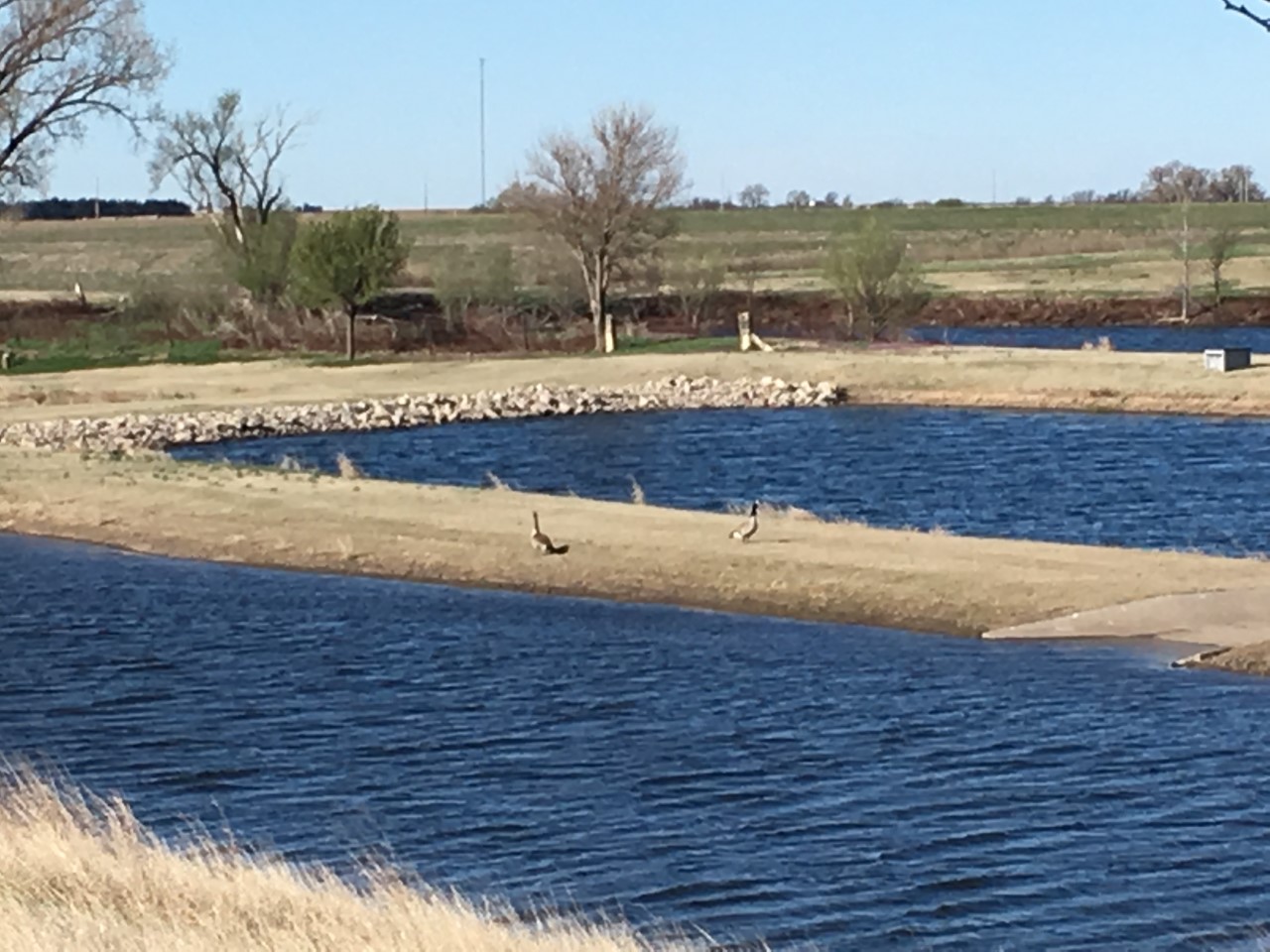
“Fly-over” country has a different meaning for me.  Every spring and every fall, thousands of birds migrate over our farm.  Canada geese, snow geese, sandhill cranes, and several species of ducks pass over our farm on their way to their breeding grounds.  Often, they stop and spend the night, or even several days.  They feed on the short, green blades of winter wheat in our field.  They search for early-hatching bugs in our pasture.  They sleep on our pond.

One recent morning, I awoke to several hundred Canada geese sleepily floating on our pond.  They became agitated and began honking noisily as Russell and Fern exited our enclosed porch and walked across our farmyard.

IMG_6172

When our dogs were still pups, they learned very quickly that they got scolded if they chased the migrating geese.  So, on that morning, like all other mornings, the dogs sat quietly and watched the geese, but did not attempt to chase them off.

Later, after completing my morning chores, I used our Ranger, an all-purpose utility vehicle, to fill the various wild animal feeders that I have scattered around our farm.  One of those feeders is very near the pond.  I knew the geese would take off as I approached the pond with the Ranger, and I was right.

It was a sight to behold.  After a cacophony of raucous warning honks, the geese lifted off the pond in unison.  The flapping of those mighty wings overhead so greatly disturbed the air, that it sounded as the whirring blades of a hovering helicopter.

They all took flight.  Except for two.  I smiled.  Fred and Ethel were back!

thumbnail_IMG_6526

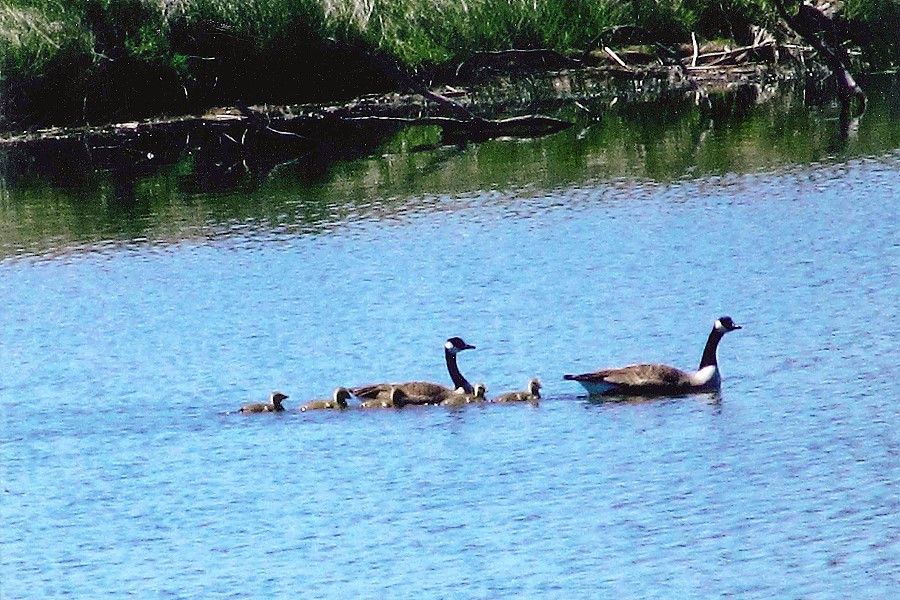
Canada geese typically mate for life and can live up to twenty-five years in the wild.  They often return to the same breeding grounds year after year.  Fred and Ethel have raised their babies on our land for almost a decade now.  When the rest of the geese noisily took off in fear, Fred and Ethel remained, calmly and quietly swimming on our pond.  They knew me, they knew the dogs, they knew the Ranger.

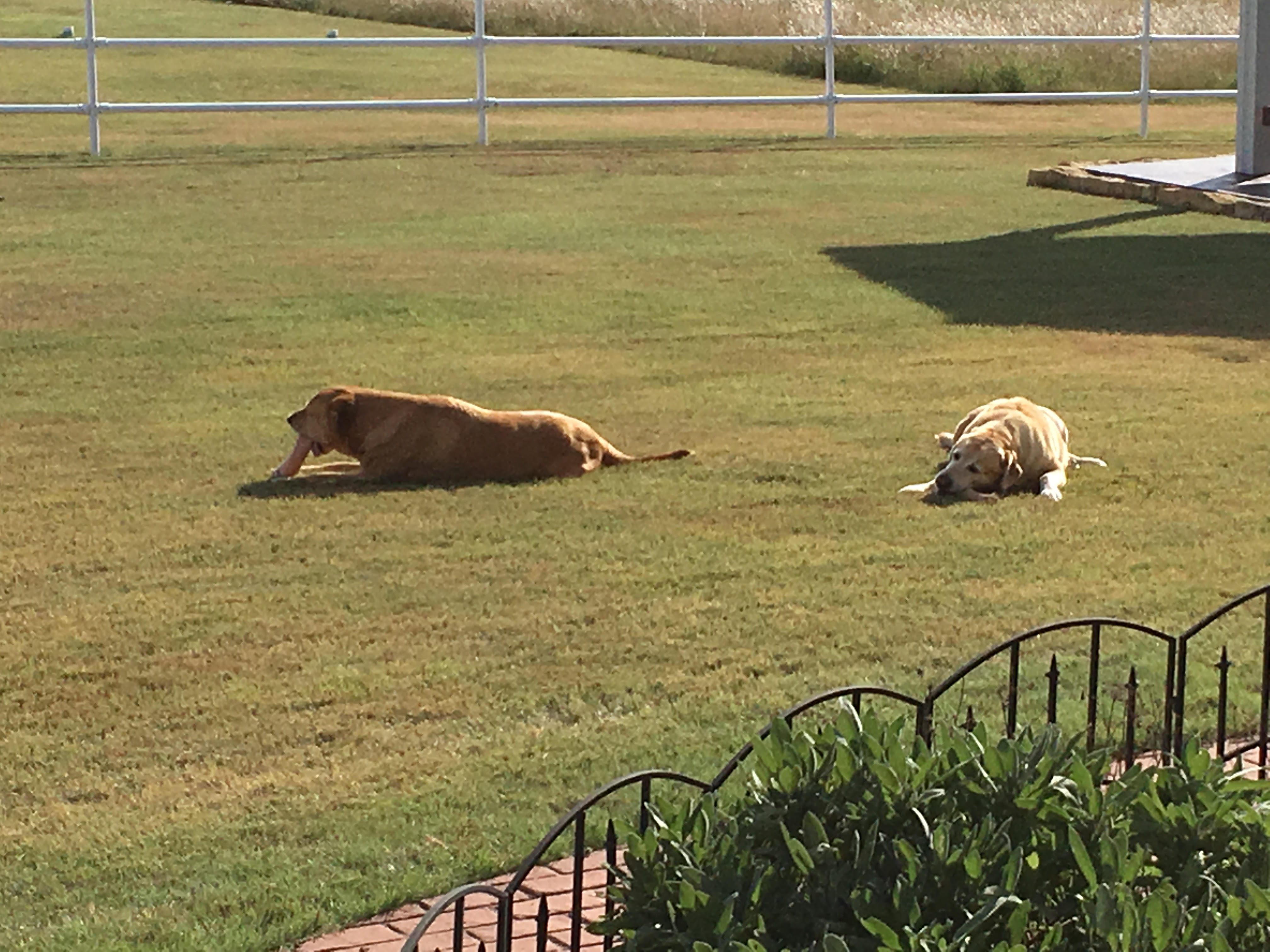
Often, the dogs will jump into our pond to cool off (they’re Labs, remember?), swim around a bit mere yards from Fred and Ethel, and each species will pretty much ignore the other.

I refuse to explain where the names Fred and Ethel came from.  Many of you, I am sure, will recognize the monikers immediately and smile at the memory.  For those of you who don’t, well, any explanation simply would not do them justice anyway.  You just had to be there.

When I see Fred alone, or Ethel alone, it’s very difficult for me to tell one from the other.  Their markings and coloring are identical.  When I do start seeing one without the other, I know the eggs have been laid, and one of them is watching the nest.

When together, Fred is obviously larger than Ethel.  And when they are all together with their babies as a family unit, their behaviors are different too.  The goslings tend to cluster around Ethel, mimicking her, feeding where she feeds.  Meanwhile, Fred will stand alert a slight distance away.  Head held high, he spends his time surveying their surroundings.

The nurturing, instructing mother and the vigilant, protective father, together with their brood.  Isn’t that how we would like to picture our own families?

thumbnail_geese

We can learn a lot from Fred and Ethel.

(I share a touching Canada goose story in the February chapter of my third book The Return to the Family Farm.)

Next week:  Ouch!


It Was Worth Getting Up For

A while back, Danny and I were preparing to leave for Rapid City, South Dakota.  It was not a vacation, and we weren’t going to take in all the tourist sites, although Mount Rushmore, the Badlands, and Wall Drug are all worth the trip.  No, we were headed to see our youngest son, his wife and our two youngest grandchildren, who reside in Rapid City.  Sometimes we fly, but this time we had decided to make the 9+ hour journey by car.

Although our family visit was everything we had hoped it would be, that’s not what this blog is about.  Instead, I want to tell you about the morning we left our farm.

It was still dark when I got out of bed.  With the long trip ahead of us, we had planned for an early departure, so I rose promptly at the sound of the alarm and went to the kitchen for a cup of coffee.  (I call my stiff, early morning walk “the coffee shuffle”)

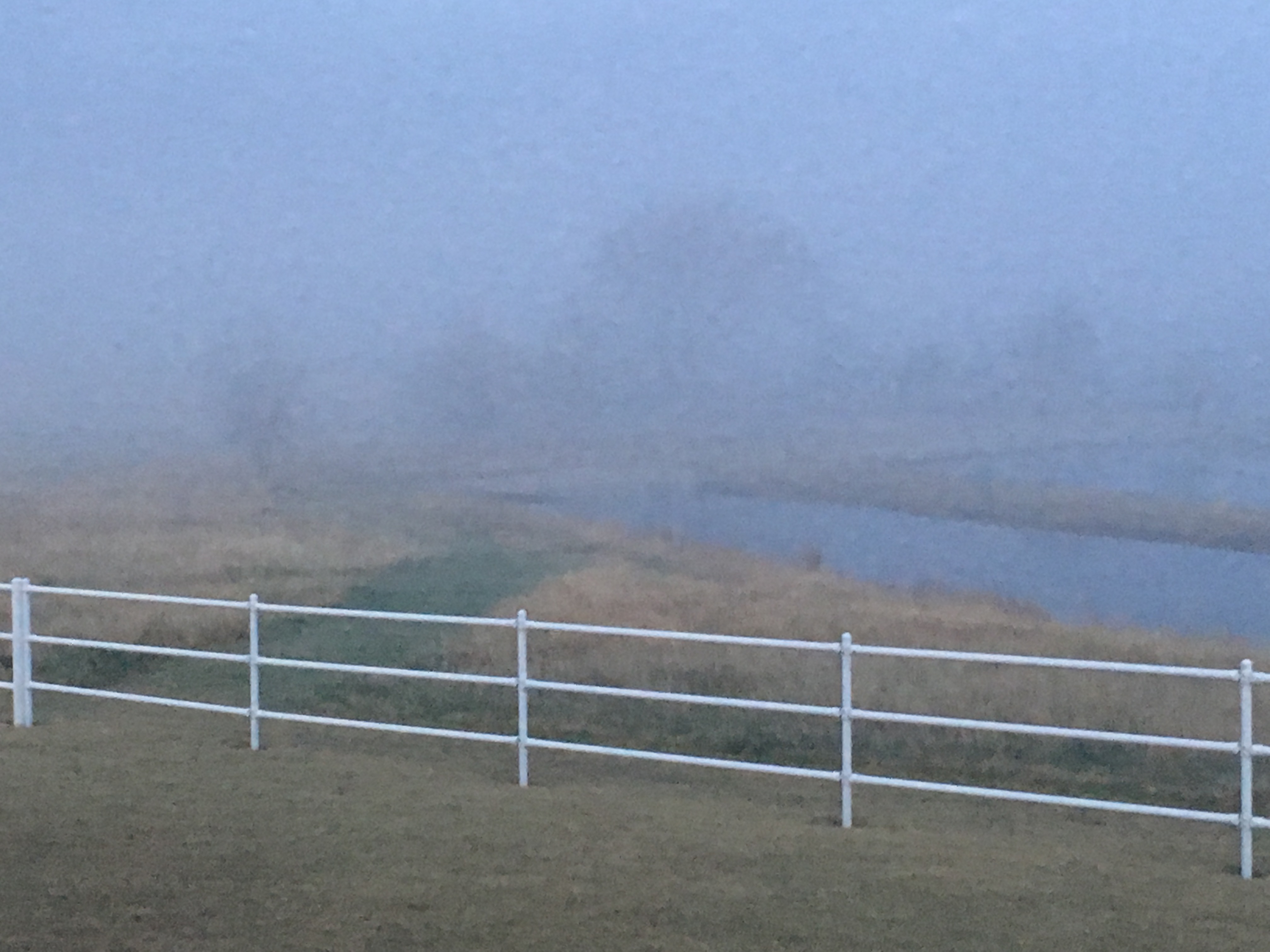
The eastern horizon was barely beginning to lighten, but when I turned on the porch light I could see that it was foggy.  I turned on our weather radio to listen to the forecast while I was making the bed and getting dressed.  Every farmer has a weather radio.  It would be absolutely foolhardy in tornado alley to not have one.  Cities have their sirens, but out on the farm we rely on our weather radio, our instinct, and our common sense.IMG_6486.JPG

Anyway, the fog was expected to burn off quickly, so it would not be a travel hazard.  What it was, however, was beautiful.

When I left the house for my morning chores, the sun had still not risen above the horizon, but I was able to walk to the barn without artificial lighting.  The farm had an ethereal, surreal quality about it.  There was not a stitch of wind, and the fog captured and absorbed each sound wave so that every noise seemed close and magnified.  I became aware of the crunch of my boots on the gravel path as I walked to the barn.  I heard the trill of a meadowlark, the cackle of a pheasant, and the honking of a goose on the pond.  I knew all of these birds were far from me, yet they sounded as if they were right beside me as I strode to the barn.

I stopped for a moment and looked around.  Through the fog, I could faintly make out the fuzzy headlights of one lone truck about a half mile away – an early morning commuter or oil-field pumper on his rounds.

My dogs were trotting beside me, but when I got close to the barn, I saw that the horses were not in the corral.  They typically spend the night in the pasture, and were not yet expecting me at the barn.  My arrival at the barn was about an hour earlier than my typical routine.

When I entered the barn, I immediately turned on the exterior barn lights.  I figured that the horses would see the light and come to the barn.

I fed the dogs and cats, and the horses still hadn’t come to the barn.  So, I stood in the corral and called their names.  With no wind, I knew they could hear me call, even in the farthest corners of the pasture.  I called and I waited.  Then I heard it.  The pounding of hooves on the pasture ground, and I knew that BJ would be first.  A horse in full gallop, mane and tail flying, is always poetry in motion, but the vision of him as he burst through the early morning mist literally took my breath away.

It was definitely worth getting up for.

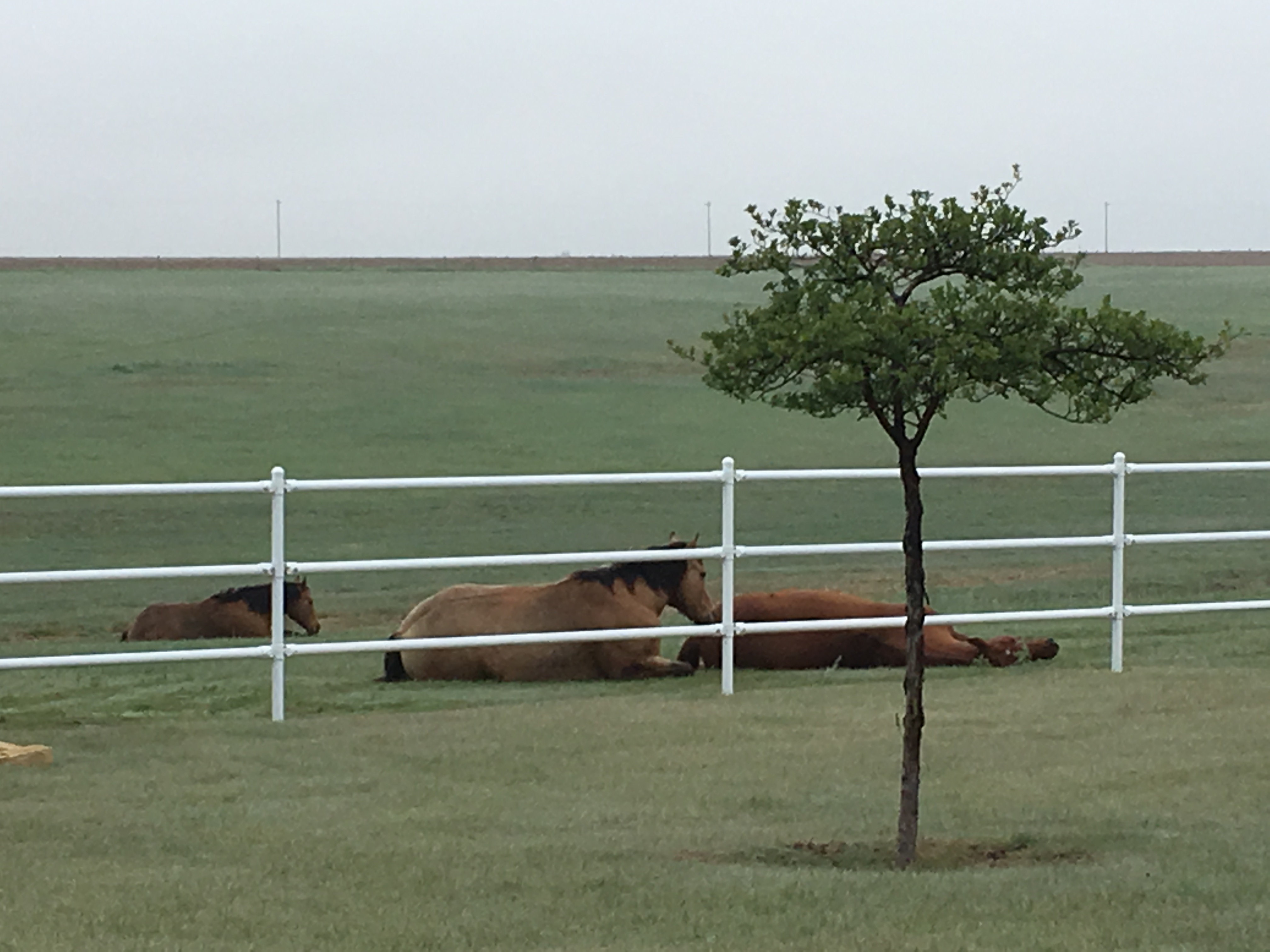
BB followed next, then Zip, but they both approached at a much slower pace than the younger, fitter BJ.  Even when the pasture is lush with green grass, I still call my horses in twice daily to check them for injury, illness, etc.  As I ran my hand across them that morning, I felt the dampness on their bodies, and I knew they had been lying down when I had called.  Horses periodically doze while standing up, but they still need to get off of their feet for about four hours per day.

IMG_6593.JPG

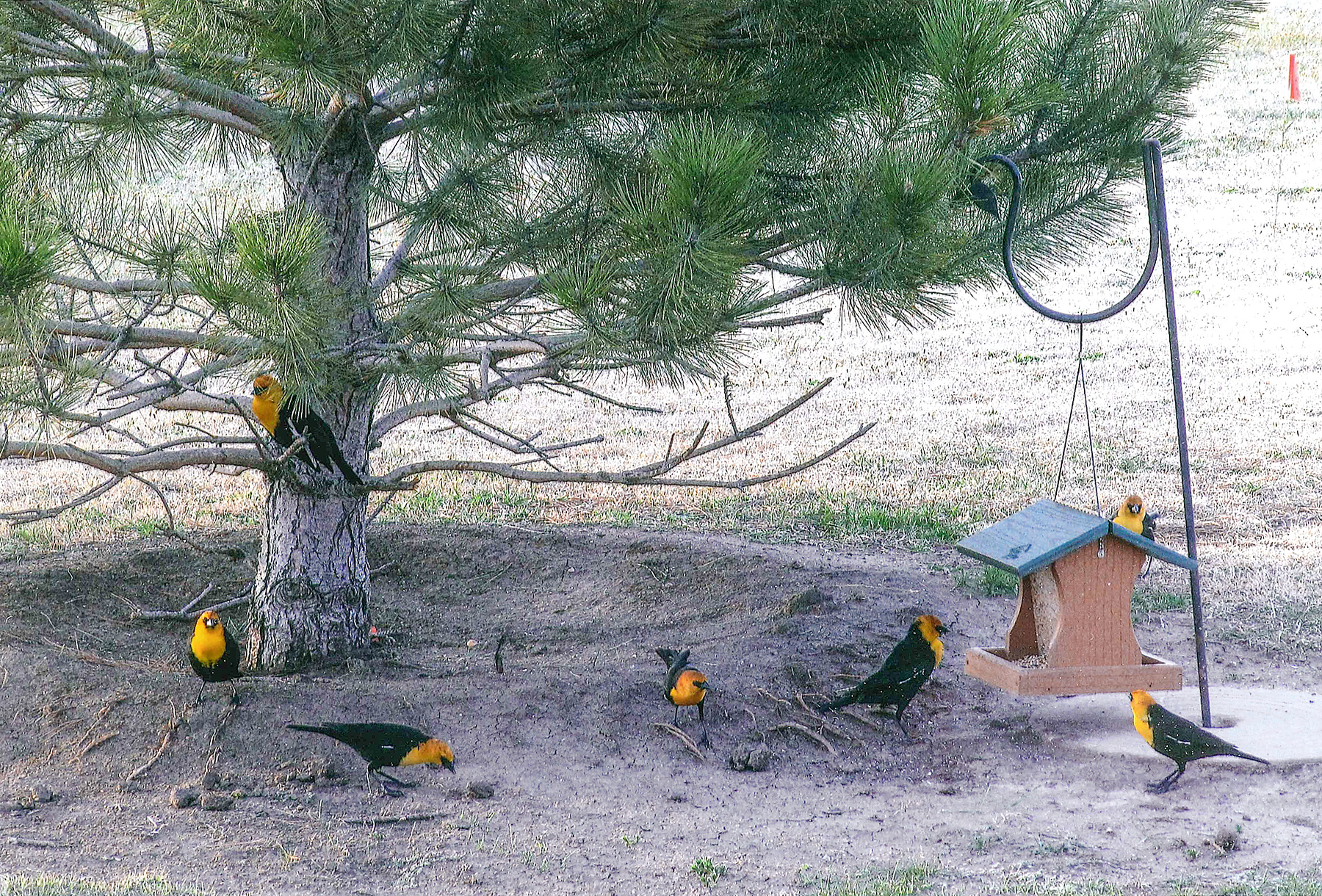
On my walk back to the house after my completed chores, I noticed a yellow-headed blackbird sitting on the ground near the corral fence.  I hadn’t seen one of them in years!  As if the fog hadn’t been enough of an early-morning gift, I had just received another!  I hoped that meant that the blackbird had returned, would stay awhile, and would bring some friends.

birds.jpg

When we leave the farm for extended periods, as we planned to that day, my adult nephew feeds and cares for our animals.  He lives only a few miles from our farm, and he checks on them at least twice daily.  I know how lucky I am to have someone I trust care for our farm when we are gone.

The drive away from our farm that morning was bittersweet.  I was so anxious to see our children and grandchildren again, but I felt just a twinge of sadness at leaving the farm.  And I was reminded of my father.

Years ago, shortly after my parents had retired from dairy farming, Danny and my dad were sitting on the farmhouse porch one beautiful summer evening.  Danny asked my dad if he planned to now, finally do some traveling.  Dairy cows need to be milked every twelve hours, rain or shine, winter or summer.  There are no vacations.  And finding someone to take over the milking can be harder than just staying home and doing it yourself.  My parents left the farm only a handful of times in their thirty years of milking.

But when Danny asked my dad that question, Daddy raised his arms and opened them wide as he slowly swept them across the horizon.  He said to Danny, “Why would I ever want to leave this?”

Indeed.

(My favorite story of my dad is in the June chapter of my second book Another Year on the Family Farm.)

Next week:  Fred and Ethel are back

It’s Really Not a Fish Story

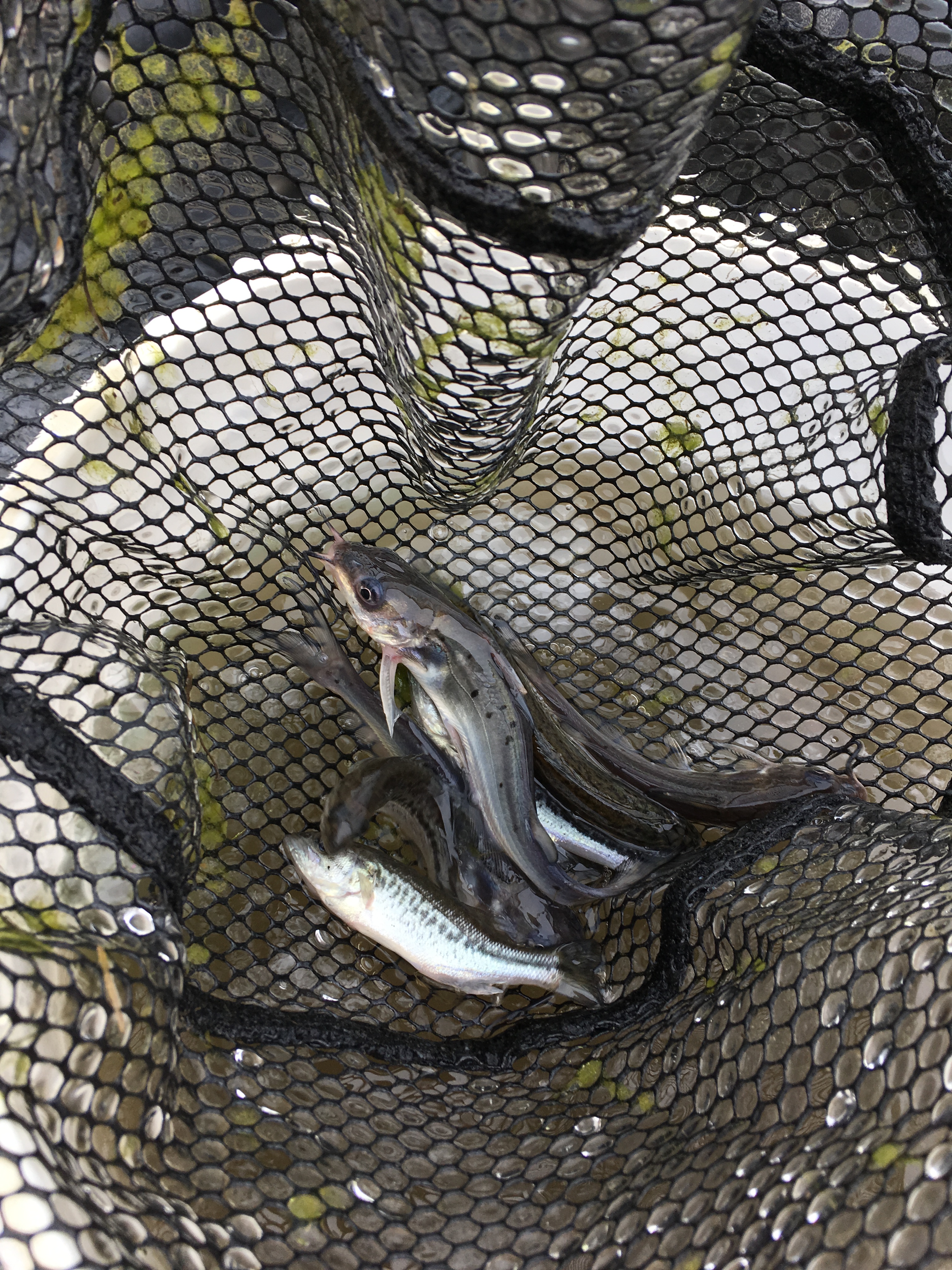
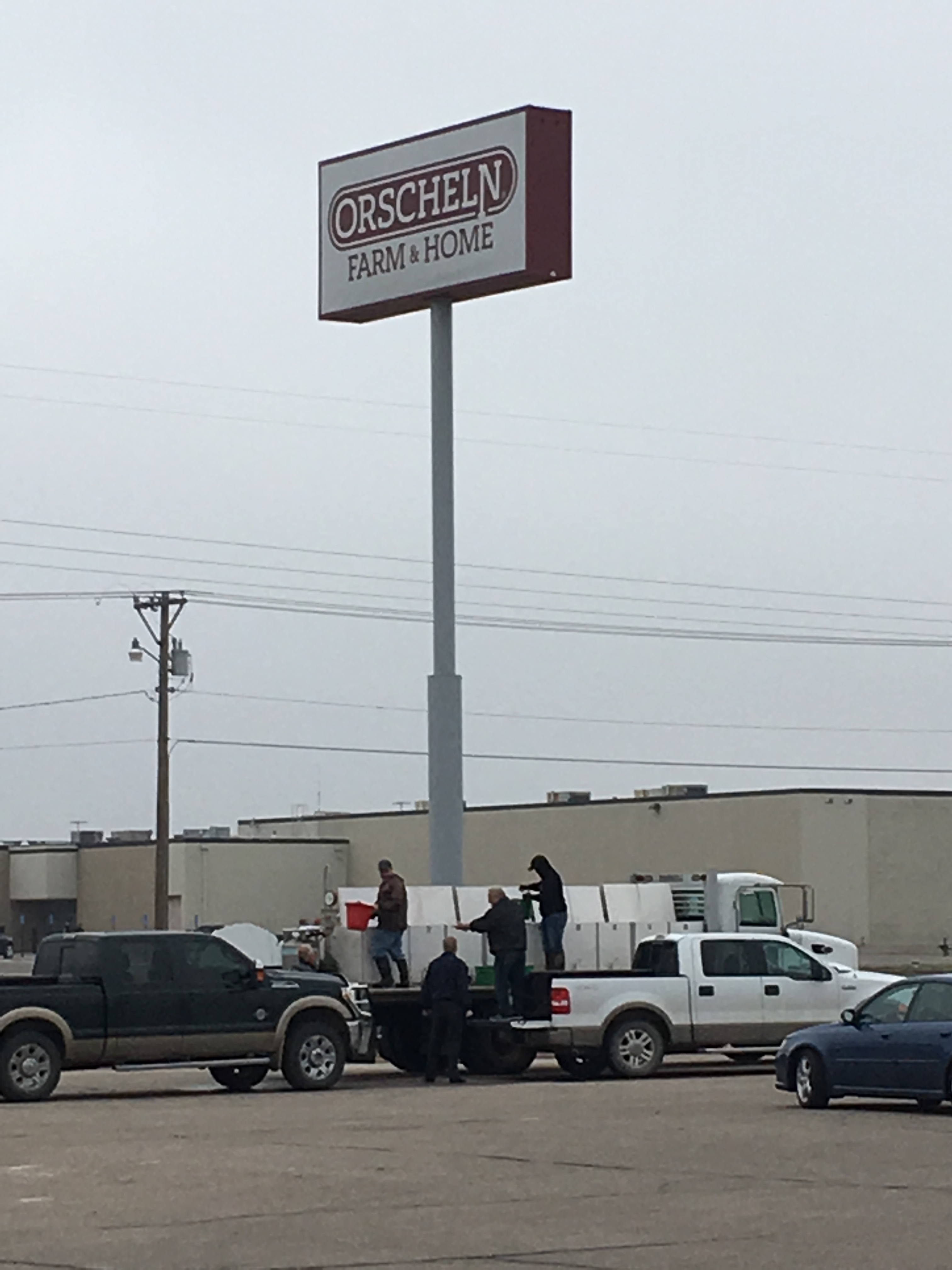
In my last blog, I mentioned our local Farm and Home Store.  It’s where we purchased our first rabbits.  It’s also where we recently purchased some catfish and bass to stock our farm pond.

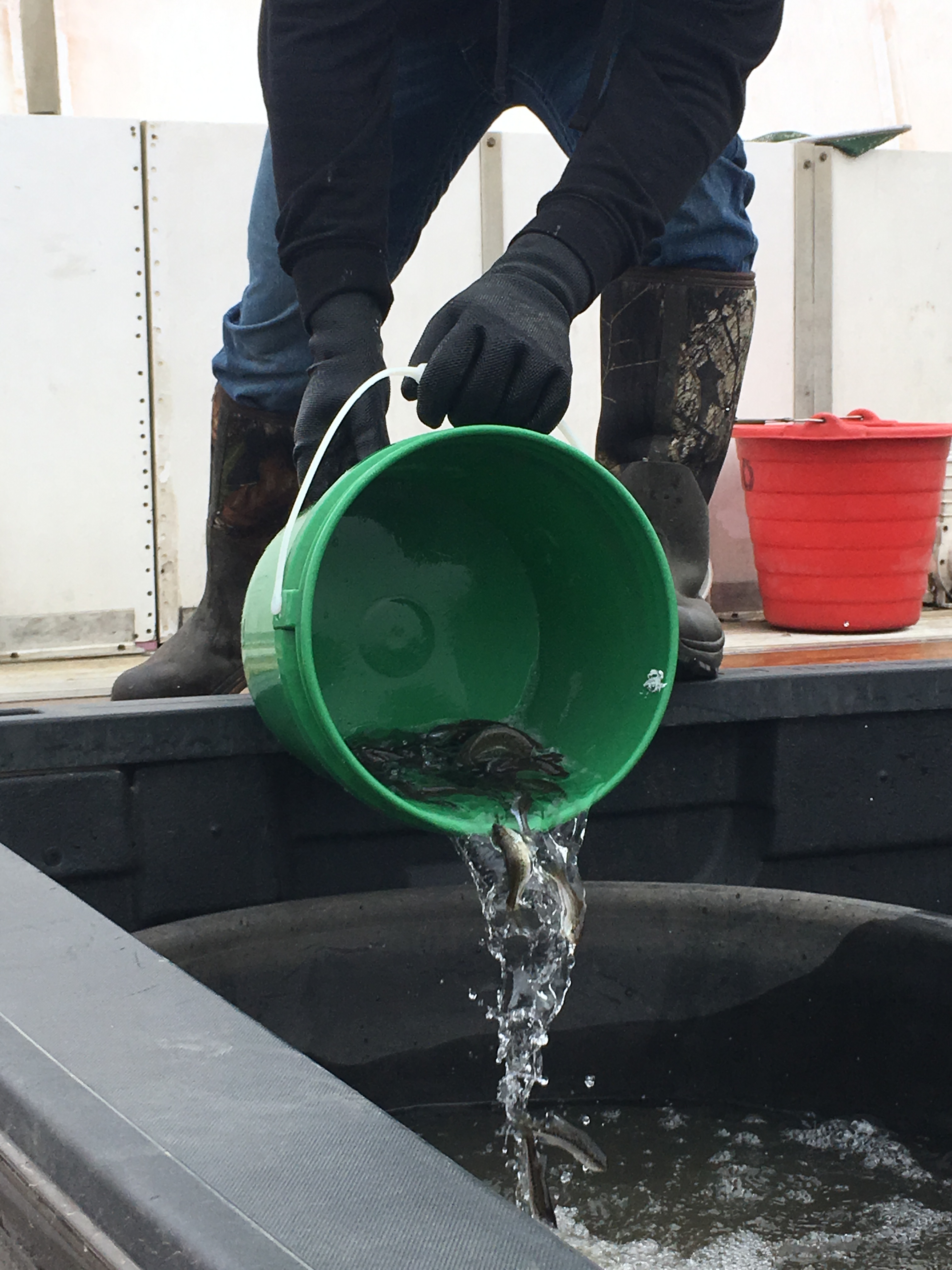
We’ve never done this before.  We’ve always just let nature take its course.  In the past, we’ve gotten fish in our pond when the creek flooded and brought some in from other ponds upstream.  But the fish brought in with the flood waters were mostly carp, sunfish, and bullhead catfish, not the varieties for which people actually fish.  So, we stocked our pond with some largemouth bass and channel catfish. IMG_6297.JPG

When Danny and I fish, it’s pretty much catch-and-release.  Well, truth be told, Danny fishes while I typically read a book.  I will look up and smile admiringly when he says, “Look at this one!” Then, I will immediately go back to reading.

Growing up Catholic, we ate fish every Friday.  Often, that fish came out of our farm pond.  I watched the fish being gutted, beheaded, descaled, deboned, washed, and finally fried.  I wonder how many kids today have seen that?  How many kids think that fish come out of the water in boneless, breaded squares?

IMG_6305.JPG

Today, our food supply is so sanitized.  People see no blood or guts, hide or feathers.  They don’t have to pick worms off their garden plants; they don’t watch a corn crop grow for months only to find it eaten by a raccoon the night before harvest.  They never lose an entire season’s worth of fruit to an early frost.

When you grow, raise, hunt or catch your own food, you learn to appreciate the hard work and long hours that go into preparing every single bite.  You don’t take food for granted.  I have never, ever, seen a farm kid who was a picky eater.

My point is, I no longer care to prepare the fish that Danny catches.  But I would if I were hungry enough.

But I digress.  Let’s talk more about this Farm and Home Store.  It’s called Orscheln (Or-shell-in, with the accent on the first syllable, and say it fast.)  It is, without a doubt, my favorite store.  I’ve been to big cities with 3-story malls filled with designer merchandise.  I’ve been to Saks, Nieman Marcus, Nordstrom and Macy’s.  I’ve been to Selfridges and Fortnum & Mason in London.

I always come back to Orscheln.

Do you have a store near you where you can buy a bridle for your horse, a pair of women’s jeans, Watkins vanilla for baking, a birthday card for a friend, some old-fashioned licorice, a kitchen faucet, a bag of feed pellets for your calves, and toss it all in the same shopping cart?

Then outside, you can pick up flowers for your front porch, a rocker for your side porch, a grill for your back porch and a round bale feeder for your pasture.

Besides live fish, you can buy live chicks, ducks, geese and turkeys in season.  Oh, and baby rabbits.  I buy my wild bird seed in bulk every fall, and fresh produce from the farmer’s market in the parking lot every summer.

But you want to know the best part?  As soon as I walk in the front door of this gigantic store, I hear, “Hi Mary.”

“Hi Holly,” I say back.

“How’s it going today?” Holly asks.

“Oh, not too bad.  You?”

“No complaints.  Let me know if there’s anything I can help you with today.”

“Will do,” I reply.  But I rarely ask for help.  I’ve got every aisle memorized.

As I check out with five forty-pound bags of oats for my horses, Holly always asks, “Need any help out with that?”

“Nope.  I got this,” I always reply.  “Thanks anyway.”  I figure if I can carry it all into the barn by myself, I can load it into the back of the Tahoe by myself.

But inevitably, as I’m loading the bags into my Tahoe, some farmer either entering or leaving the store, someone whom I’ve never met before, will go out of his way to cross the parking lot and help.  He’ll grab one of my bags out of the cart, say, “Here.  Let me help you with that,” and toss it into the back of my Tahoe without even asking.  I never object.  That would be rude.  I let him help me, then I always say “Thanks!” with a big smile.  Even though I know I could have done it myself.

And that’s the best part about Orscheln, Farm and Home Store.  It’s the people who work there, and it’s the people who shop there.  And that’s no fish story.

(If you want to read more about producing your own food, read the October – Hard Lessons chapter of my first book A Year on the Family Farm.)

IMG_6280.JPG

Next Week:  It Was Worth Getting Up For

Our Dog Ate the Easter Bunny!

I come from a large family.  I had six siblings, and by today’s standards, that’s large.  At the time, however, it didn’t seem so large.  I knew many kids whose siblings numbered in the double digits, so my family of seven kids was not unusual back then.

What was unusual, however, was the gap in ages.  My four brothers were born in 1935, 1936, 1938 and 1939.  Then, my two sisters were born in 1947 and 1949.  Finally, in late 1956, I came along.  By that time, my brothers were in their late teens and early twenties.  As a little girl, my two youngest brothers teased me mercilessly.  They even had a special name for me:  Gullible Mary.

Case in point:  It was getting close to suppertime one day in early spring.  My mom was cooking in the kitchen and I was playing on the floor very near her.  My two youngest brothers came into the house after their evening chores.  One of them casually told me, “Well, looks like the Easter Bunny won’t be bringing you anything this year.  Mikey killed it.”  He nodded toward the front door.  My other brother just grinned.  Horrified, I ran to the front door, and sure enough, I witnessed our farm dog, Mikey, returning home after a day of hunting with a limp rabbit in his mouth.  I realize now that rabbit was a cottontail, but back then I believed with all my heart that our dog had killed the Easter Bunny.  Of course, I began to sob uncontrollably.  My mother quickly reassured me that the dead rabbit was NOT the Easter Bunny, and then, with her hands on her hips, scolded my two laughing brothers with “Will you boys leave her alone!”  It was not the only time she ever uttered that phrase.

When I was a pre-teen, my Godfather brought me a baby rabbit one year as an Easter gift.  Mom said I could use the old rabbit pen that my brothers had used years before for their 4-H projects.  I struggled to come up with an appropriate name for the rabbit.  My mom suggested “Harvey” after the 6-foot invisible rabbit in the James Stewart movie.  Even then, I loved old movies.  Harvey, it was.

A few months later, a classmate wanting to get out of the rabbit-raising business offered me a free rabbit if I took it off his hands.  I named him Henry.  I figured Henry would be the perfect companion for Harvey.  Boy, was I ever right.

Turns out, “Henry” was a Henrietta.  I discovered that fact when I found dead baby bunnies in the cage with them.  You cannot leave the father in the same cage with the babies.  It was one of those hard-learned farm lessons that you never forget.

I thought about these childhood rabbit stories the other day as Danny and I were spring-cleaning our rabbit pen.  Right now, we have two bunnies – Salt and Pepper.  I’ll give you a couple of seconds to figure out which is which.

image1.jpeg

So why bunnies?

After we moved back to the farm, we took the visiting grandkids to the Farm and Home store to see the baby bunnies.  Of course, they wanted to take some home.  (Did anyone see that one coming?)  Danny was not thrilled with the idea, but I was an easier sell.  I had such great childhood experiences with rabbits, after all.  What could possibly go wrong?

Have you ever tried to determine the sex of a bunny?  Without becoming too graphic, just know that things don’t, well, dangle like they do in other species.  It’s pretty hard to tell what you’re dealing with.  Plus, there’s a lot of fur.

I took my chances.  I figured I had a 50% chance of no babies.

I know what you’re thinking right now, and … you are right!  There’s also a 50% chance of babies.

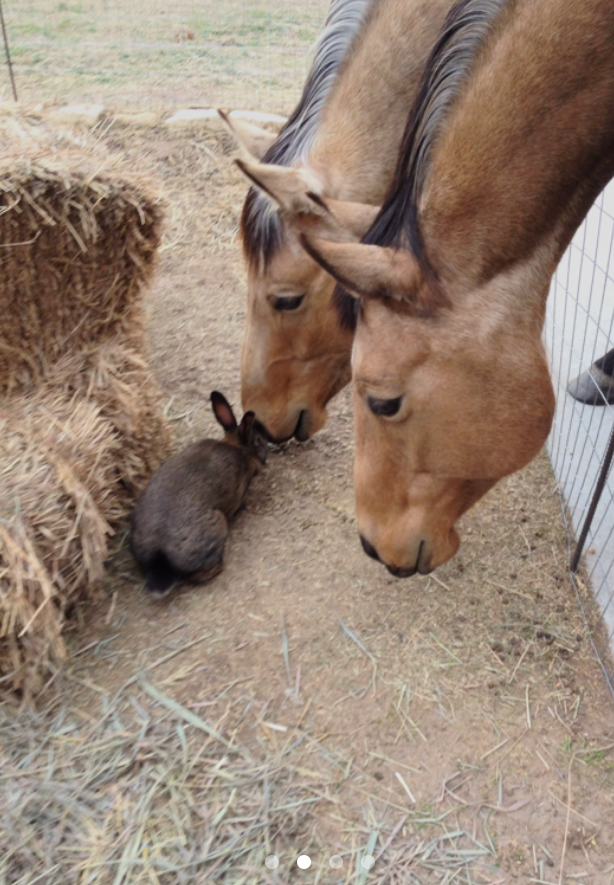
A few months later, after witnessing some quite randy behavior in the cage, I surmised that Oreo (named by our oldest granddaughter. Suited him perfectly.) was to become a father and Princess (named by her Disney-infused younger sister.  Thank goodness the names weren’t switched!) was to become a mother.  Trust me.  There was no confusion on that one.  (The accompanying photo shows Princess with BB and BJ.)

image1.jpeg

I was determined to raise these babies to adulthood.  So, I borrowed another rabbit pen and separated the two rabbits.  Then I did some research – gestation length, what the mother needs to build her nest, etc.  I set a box lid inside Princess’ cage and gave her some loose hay to work with.  She built the most beautiful nest!  And she lined it with her own soft fur.  I did not witness the birth, but she gave birth to eight squirmy, hairless blobs that turned into the cutest, softest, cuddliest creatures ever!

I kept two, Salt and Pepper, and gave the rest away.  I wanted no more babies.  My vet determined that both Salt and Pepper were male so I had them, and their father, neutered.  Sadly, both Princess and Oreo have now passed.  But Salt and Pepper are still active and healthy.

Danny and I decided our bunnies needed more room to roam, so we built an outdoor fenced area big enough for lots of activity.  Initially, the floor was the natural ground.  But when we discovered that they were tunneling their way to freedom, we covered the ground with a steel mesh floor that still allows grass to grow, but eliminates jail breaks.

We use hay bales for their shelter.  I set them up like a maze so they can hide like they do in nature, with more bales for the roof.  Inside, they create a cozy home by covering the floor with hay they pull from the bales.  When they need to poop or pee, they leave their home and go to the furthest corner of the fenced area to do their business.  I never find a single milk dud inside their home.

One more quick rabbit story:  For a while, we kept Flopsy, a rabbit that my sister had purchased for her grandkids, in the same pen with ours.  Now, to fully appreciate this story, you need to know that both of our dogs chase, and occasionally catch, wild rabbits.  But they never bother our pet rabbits.  Somehow, they just know that these rabbits are our pets and they are off-limits on their doggy menu.  At the time we got Flopsy, we still had our own four rabbits, so she became the fifth rabbit in the pen.  Neither of our dogs witnessed the arrival of Flopsy.

The evening of the first day that Flopsy joined our family, Fern, our female lab, nonchalantly walked past the pen as I did my evening chores.  Suddenly, she froze, then went into immediate attack mode.  She stared at Flopsy, circled the pen as Flopsy hopped, and scratched the fence to try to get at her.   In the midst of five rabbits, she had recognized a stranger!  How?!  Was the scent different?  Did she recognize the difference by sight?  It took only a couple of days before both dogs understood that Flopsy was also part of our family now, and they once again walked nonchalantly past the rabbit pen.

(If you enjoyed the story of my siblings, I tell many more “brother”, and also “sister”, stories in all three of my farm books.)

Next Week:  It’s Really Not a Fish Story

Wild Thing, You Make My Heart Sing

We have a large pond on our farm which is fed by a medium-sized creek.  It naturally attracts all sorts of wild animals.  Water fowl such as geese, ducks, cranes, egrets and pelicans all congregate at various times of the year.  Meadowlarks, quail, pheasants, turkey, owls, and hawks all nest in the prairie grasses or cottonwood tree branches.  We see deer, raccoon, badgers, beavers, coyotes, jackrabbits, cottontails, and muskrat, and most of these “wilds” raise their babies on our land.

I remember lots of wilds from my childhood years, but it’s only now, as an adult, that I have truly come to love and appreciate them.  And I have learned so much!  My parents taught me everything I know about raising and caring for horses, cattle, cats, dogs, pigs and chickens, but very little about the wilds.  What I know about them now, I have mostly learned from meticulous observation and a few carefully selected books on native Kansas wildlife.

I am not a hunter.  I have absolutely nothing against hunting, and it would be highly hypocritical of me if I denounced hunting as I savor another forkful of my tender, medium-rare rib-eye steak.

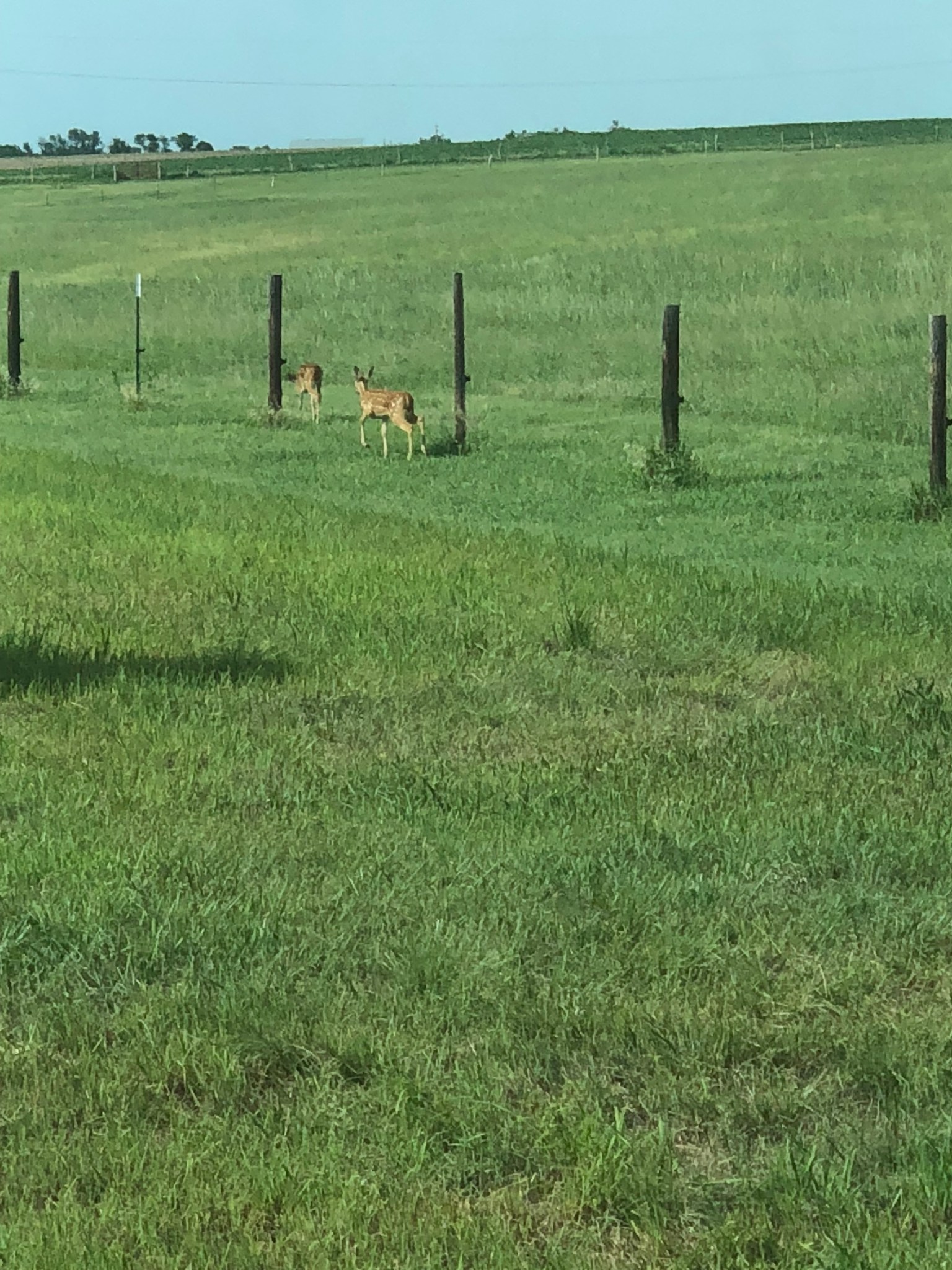
Having said that, Danny and I do not, however, allow hunting on our land.  The reason is simple.  We enjoy watching the wildlife more than we would ever enjoy eating it.  And the wilds are not stupid.  If they were hunted on our land, they would stop coming.  And they would stop raising their babies here.  (Danny took the accompanying photo of twin fawns.)

IMG_6185

A few years ago, one of my teenaged great-nephews was visiting our farm with his family.  He had just completed his hunter safety course and was anxious to put his new-found knowledge to use.  He asked me if he could hunt on our land.

I said, “Tell you what.  You can hunt anything that I haven’t already named.”

He said, “Great! What about those ducks on your creek?”  A flock of about fifty mallards had been congregating in a bend of our creek for several days.

“Oooooh,” I replied, with a disappointed look on my face.  “Sorry.  They’ve all got names.”

He looked quizzically at me for a few seconds, then the light bulb went on.  He grinned and shook his head.  He never asked again.

Sharing the land with the wilds has produced some interesting tales for the telling.  Here are a couple of my favorites.

Years ago, shortly after Danny and I moved to the farm, our dogs woke us in the middle of a warm summer night, barking furiously.  They sleep in an enclosed porch right off our kitchen, and when I arose to check on them, I found them eagerly jumping and whining, pleading with me to open the door and let them out.  So, I did.  I did not turn on the porch light first, I did not peek outside.  I just let them out in the dark.  Instantly, there arose a horrendous ruckus of barking, growling, porch chairs tipping, buckets rolling!

I quickly ran to flip on the porch light.  By the time I got back to the door, the intruder was gone.  The dogs were sniffing the porch, the hair on their backs still raised, but there was no indication of who our unwanted visitor might have been.

Several days later, I happened to walk past an upstairs window.  We have a two-story farm home, and this particular window was directly above the roof of the porch that had been the scene of the nocturnal disturbance just a few days prior.

There were muddy paw prints on the glass!  Paws shaped like tiny, human hands!  The paw print of a raccoon.

Suddenly, everything made sense.  Lured by the scent of our barbecue grill, a raccoon had visited our porch during the night, then, knowing it could not outrun the dogs, escaped by climbing to safety.  It shimmied onto the grill (I discovered later that our grill cover had shred marks on it.) then the porch rail, and finally the porch roof.  I shuddered when I realized that, had I opened the upstairs window that night, we would have had a raccoon in our house.  As much as I love the wilds, I’m not sure I want to share a bed with one.

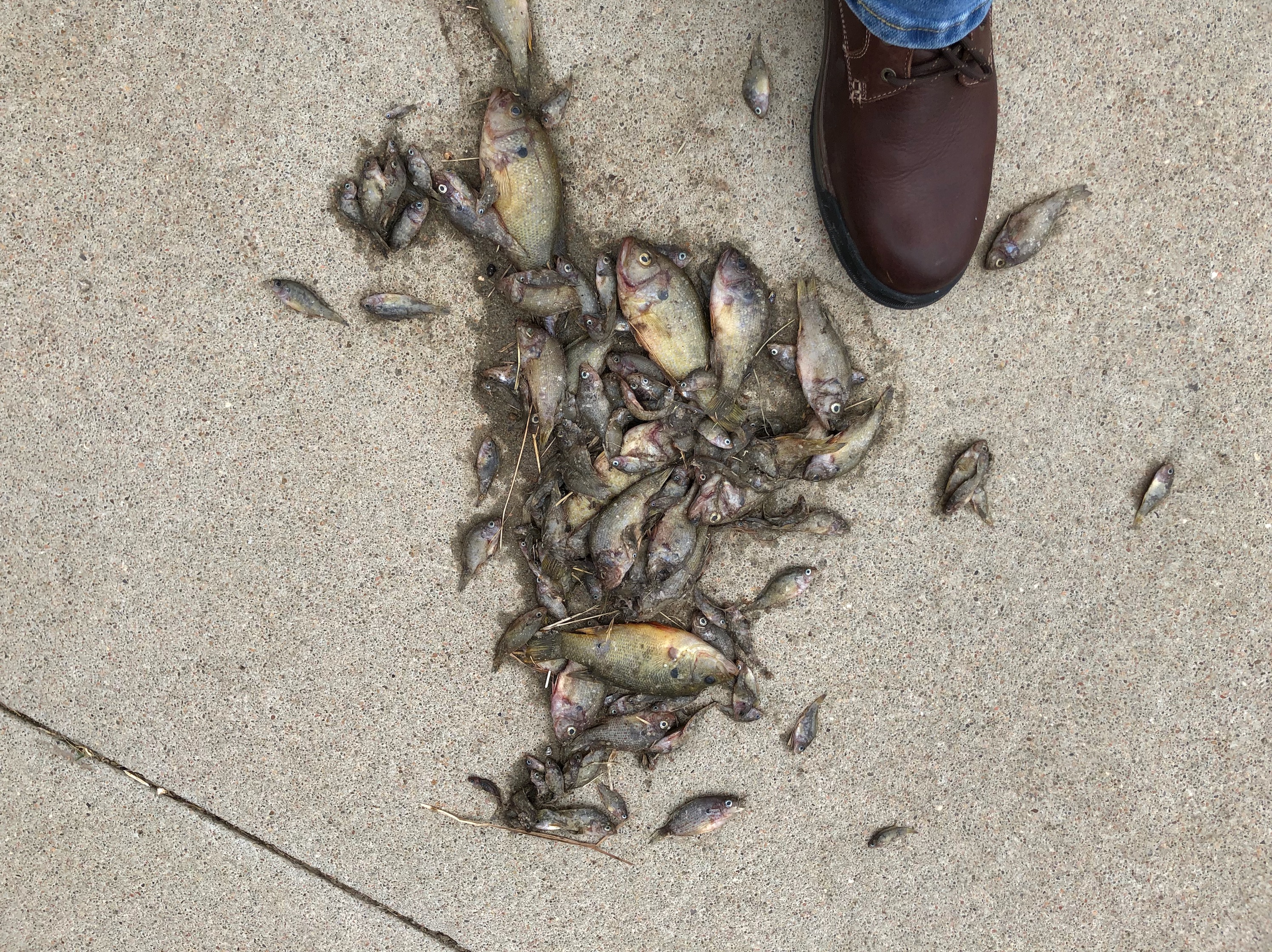
This next incident happened almost exactly one year ago.  It was early spring, and the wilds were once again coming to life: on the move, out of winter dormancy.  I was doing my morning chores, and had just fed and watered the rabbits.  Our rabbit pen is situated very near our exterior barn wall, right next to the barn driveway pad.  I didn’t notice the pile at first.  When I finally saw it, I couldn’t recognize what it was from the distance of the rabbit pen.

Something was splattered across the driveway pad.  Was it the poop of some animal?  It was a darkish gray splattering of something roughly two feet across.  I walked up to it and bent down for closer examination.  My jaw dropped open.  It was…fish!  In the middle of our corral, what amounted to a five-gallon bucket of tiny fish had been splattered on our concrete, and was now frozen to it.  (Danny’s boot gives perspective to the size of the fish pile in this photo.)

IMG_6260.JPG

I stood there, staring, with my mouth open.  It looked like the fish had just dropped from the sky.  I remember looking up at the clear blue sky, my mind reeling.

I called Danny, who was at work.  He thought I was joking.  I assured him that I was not.

We puzzled on it for several days.  We called people that we thought might give us insight.  It was not a human prank.  Of that much we were sure.  So what animal did this?  Raccoons eat fish, but not that many! And if an animal retched it back up, it would look partially digested.  These fish were still perfectly formed, like they had just been seined out of the pond.

Finally, we got our answer.  About three days after I found the frozen fish, I happened to walk past our dining room window and, glancing out, saw a flock of pelicans on our pond! Of course! A pelican had seined our pond and collected a gullet full of fish.  The night before I found the fish, a fast-moving, hard-hitting cold front had blown through from the northwest.  If the pelican had tried to take off from our pond, it would have been blown directly over our barn.  Whether it had dropped the fish from the air, or whether it made an emergency landing and then dumped its cargo, we will never know.  But Danny and I now both rested easier once our fish mystery had been solved.

Raining cats and dogs, indeed.  At our house, it rains fish.

(I share a racoon story from my teen years in the October chapter of my second book Another Year on the Family Farm.)

Next Week:  Our Dog Ate the Easter Bunny!

IMG_6244

She’s Special, and She Knows It

So, an interesting thing happened to me this morning while doing my chores.

Horses, like dogs, are highly intelligent animals.  And they each have a unique personality just as dogs do.  This story involves both species of my animals.

My three horses are named BB, BJ, and Zip.  BB is a mare (adult female) and BJ and Zip are adult geldings (neutered males, who, in the horse world, are said to be “gelded.” It’s said with a hard G).  BB is BJ’s mother.  Zip is not related to the other two.  (I call him “Uncle” Zip.)  They are all three registered quarterhorses, although Zip is 1/8 thoroughbred.

IMG_6275.JPG

The accompanying photo shows BB with BJ ten years ago when he was a foal.

BB was the first horse that I ever owned.  I was raised with horses, learning to ride before I was even big enough to dismount on my own.  But the horses I rode were our farm horses and Daddy made all the decisions.

Not so with BB.  I was forty-six years old when I purchased BB as a yearling in early 2003.  Back then, we were both young, frisky, and at times, a bit too spunky and mischievous for our own good.

Today, we are both much more “mature” women.  We both still experience the occasional mood swing, but not nearly as often as we experience bouts of arthritis.  Let’s just say that we “get” each other.

I love BJ and Zip with all my heart, but in a totally different way.  They’re boys, after all.  Need I go on?

Anyway, BB knows I love her.  She knows she’s special.  And even though I know she loves me back, she is not above taking advantage of my love for her.

Our barn is built with two large stalls (all three horses can easily fit in one stall), an open loafing area (a roof and 3 sides, with an open front), and a totally enclosed interior area where we have the tractor, implements, tools, hay bales, work bench and horses’ tack.  This enclosed area is off-limits to the horses.  Supposed to be, anyway.  There is a walk-in door connecting the horses’ loafing area with our enclosed barn.

Let’s call this Door A.  BB knows how to open that door.

Actually, all three do, I’ve seen them do it, so we have to keep Door A locked when we are away from the barn.  But when I am doing my chores, I am constantly walking in and out, back and forth, carrying things, and it is a huge hassle to lock and unlock the door each time I pass through it.  BJ and Zip will not open that door when I am working because they know I will scold them and they respect my authority.

BB does not, because, well, you know, she’s special.

I began my work routine this morning, as I do every morning, by entering the interior of the barn through an alternate door (Door B) on the opposite side of the barn from the corral.  As always, my two dogs, Russell and Fern, were with me.  This is my routine:

  • I measure a scoop of cat food. I set it on the floor near Door A.
  • I set the container of rabbit food on the floor near Door A and fill a dish with fresh water for the rabbits. I carefully set the dish of water on top of the food container.
  • I measure a bucket of mixed oats, pellets and grains for the horses. I hide this bucket near the wall behind Door A so that when the door is open as I pass through, the horses won’t be able to see it.  They recognize that bucket.  And they love what’s inside.
  • I measure dog food for my two dogs who are waiting patiently with slowly wagging tails. I always feed them in the tack room while I am working with the horses in the loafing area.  The dogs are easily distracted from eating, so I close the tack room door while they eat.
  • Before I feed my horses, I shovel any poop and sweep the floor around the feeder. Horses are very clean animals and will not eat any food that has touched poop.  I make sure the floor is clean so if hay from the feeder drops on the floor, they will eat it and not waste it.

IMG_6485.JPG

Unfortunately, the horses are not typically as patient as my dogs when they are waiting to be fed.  They will paw the floor, they will nip at each other, and they will jockey each other for position as they push their way towards the feeder.  Now these are agile, athletic, muscular creatures weighing roughly 1000 pounds.  Even though I demand a respectful distance while I am working, I still keep one eye on them as I shovel and sweep.

That is how it was this morning.  I kept a watchful eye on BJ and Zip who were nipping at each other in the corral, as I shoveled and swept the floor.

Crash! Clank!

I whipped my head around in the other direction and saw BB standing in now-open Door A.  Her front legs were inside the barn, her back legs were outside of the barn, and her belly filled the doorway.  I didn’t know what had crashed and I couldn’t fit through the doorway around her belly.

“Move!” I said as I smacked her rump with my hand.  She didn’t budge.  She did, however, lift her head from inside the barn and glance at me sideways.  At least I got that much of a reaction from her.

I bent down, peeked underneath her belly, and discovered the source of the crash.  She had knocked over the container of rabbit food and spilled the entire contents of the water dish that I had set on top.

“Oh, BB!” I said, exasperated.  She was sniffing the floor.  I know what she was searching for.  I’m sure you do too – that grain bucket that I had hidden behind the door.  I could almost read her mind.  “I know it’s in here somewhere.  I smell it!  Where is that darn green bucket?!”

Water was everywhere.  I needed to get in there and clean it up before it spread even further.  “Move!!” I yelled louder and smacked her rump again.  This time she moved.  She walked completely through the door, turned around and, giving up on the bucket search, went back outside.

I wiped the concrete floor, refilled the rabbits’ water dish, and fed the horses.  By this time, I knew the dogs would be long finished with their meal and waiting patiently for me to let them out.

I opened the tack room door and the dogs nervously rushed past me all the way outside.  I checked their food dishes.  They had barely touched their meals!  Sigh.  My dogs are the exact opposite of my horses.  They are very loving, but very meek, with easily-hurt feelings.  Had that been one of my dogs that I had been trying to move out of Door A, I would have only needed to raise an eyebrow and gently motion “move” with one of my fingers.

As it turns out, when my dogs heard me yell at BB so close to the tack room, they thought they were being scolded.  They immediately stopped eating and froze until I opened the door.  So, I called them both back into the barn, into the tack room, and coaxed them into eating again by gently petting them and softly reassuring them, “It’s okay, Babies.  I wasn’t yelling at you.”

It was an interesting morning.

(If you would like to know exactly why BB is, and will always be, special to me, read the “August” chapter in my third book, The Return to the Family Farm.)

Next week:  Wild Thing, you make my heart sing.

What is that smell?

If you read my first blog, Greetings From the Farm, you might remember that I described myself as “hopelessly old-fashioned”.  It should then come as no shock to you that I did not set up this website or blog on my own.  I enlisted the aid of a young, energetic, extremely knowledgeable, college senior focused on electronic marketing.  I didn’t even know there was such a thing as “electronic marketing” until I spoke with her.  Now I do.

She informed me that a typical blog should be able to be read in about 5 – 7 minutes.  This made perfect sense to me.  I figure that’s the average length of time needed to take the average poop.  (Are you going to deny that you take your phone in there?)

I realize some of you may find my poop comment to be indelicate.  That is but one of the differences between someone who lives in town versus the country.  When you live on a farm, poop just naturally becomes a part of your day.  Allow me to explain.

Every morning and every evening, my farm chores include feeding my three horses, two dogs, two cats and two rabbits.  But what goes in, must also come out.  If the animal poop is not dealt with, flies become a serious issue in summer.  Horse hooves can become sore if impacted with manure.  Penned animals can become sick or get intestinal worms.  This is why we take great care to keep our animals’ areas clean.  Clean animals are healthy animals.  And healthy animals are happy animals.

I keep a particularly close eye on my horses’ poop.  If it is too soft, too hard, the wrong color, or if there’s not enough of it, it means a call to the vet.

unnamed-1

So, every morning and every evening, I shovel and sweep the stalls, placing the poop on a pile in the corral.  Every week, Danny uses his tractor to scoop up the large pile and spread it on our fields and pastures.  It is magnificent fertilizer.  I also use the dried manure as fertilizer in my vegetable garden.  I feed the horses…they help feed us.

Not so long ago, I was reminded that not everyone is so accustomed to poop during a visit to our farm by my cousin Keith and his family.  They were visiting from Florida where they live in a large city.  Naturally, his kids wanted to see all the animals on our farm, and we began the tour with our horses.  As we stepped into the corral, Keith’s pre-teen daughter crinkled up her face so hard that her eyes disappeared and the tip of her nose almost rested on her forehead.

“What is that smell?!” she exclaimed.

It was, of course, the smell of horse poop.  Now, for those who have never smelled horse poop, I want you to know that I, for one, don’t find the odor the least bit offensive.  I really don’t particularly care for the smell of either dog poop or cat poop, but they are carnivores, you see.  Because a horse is a herbivore, its poop has a much milder aroma.  Depending upon what the horse has feasted on, clover, alfalfa, etc. the scent might actually be described as “sweet”.

My dogs totally agree with me.  Now you need to know that what I am about to describe, I have only witnessed in winter.  When the horses’ poop is frozen solid, my two yellow labs will sniff the various horse nuggets until they each find just the right one.  (“No, not this one.  It’s not ripe yet”.  “Oh, this one has an especially piquant fragrance!”) Then they will delicately loosen the frozen nugget from the rest of the pile with their teeth, carry it out of the corral, where they hold it in their paws and gnaw on it until it is entirely consumed.

I call them “poopsicles”.

For the record, I do not let my dogs lick my face.  (The accompanying photo shows our dogs gnawing on raw beef bones, not poopsicles.)

unnamed copy

The dogs are not the only animals who seek nourishment from the horse poop.  I have seen both meadowlarks and geese scratching and pecking at the dried poop to retrieve undigested oats, corn, and weed seeds.  It is all a natural part of the farm circle of life.

When I was growing up, my parents ran a dairy farm and my mom raised chickens for both meat and eggs.  I will tell you this:  I do not miss cleaning up the poop from either one of those species.  I will buy my milk and eggs, thank you very much.

For those of you interested in history, here is an interesting tidbit from early life on the Kansas prairie.  Newsflash: There are minimal trees on the prairie.  And the railroad depot, through which mined coal from the East Coast was delivered to towns, could be many miles from the area farms.  So, if you didn’t have trees, and coal was too expensive and difficult to purchase, what did you use for heat and fuel?

Dried cow patties.  Every farmer had multiple cows.  My mother (Born in 1915, Died in 2011) recalled that collecting dried “cow chips” was a job for the little ones in the family.  Her mother would give her a basket, and tell her not to come back until it was filled with dried chips.  When completely dried, they burned hot and had very little scent.  You can imagine that a large store would need to be collected before winter set in.  Caution:  Kids, if you’re going to try this at home, be sure to not pick up the cow chip until it is completely and thoroughly dried.

One more farm “poop” story before I let you go for today:

A couple of summers ago, I kept finding this mysterious poop on our porches, sidewalks and driveway daily.  Multiple poops.  I couldn’t figure out to what kind of animal it belonged.  It was too small for a dog or cat, and too big for a rodent.  A small raccoon, perhaps?  I was mystified.  I told Danny that maybe we should set a trap, but I had no idea what type of food to even put in the trap.

After several weeks of this, we happened to be at a cocktail party where I was chatting with a friend who also lived in the country.  She asked me if we were inundated with toads the way they were.  I told her that, yes, we had an abundance of toads that summer as well, but I liked the toads because they kept the bugs out of my herb garden, vegetable garden and flower beds.  In fact, I told her, when I found stray toads, I deliberately caught them and relocated them near my house as bug control.  “But what about the poop?” she asked.

A light bulb went on.

“Google it,” she told me.

The next day I closely examined the mysterious dried poop on our driveway.  It was virtually entirely composed of undigested bug parts.  I compared it to the online photos.  Mystery solved.

You’re going to Google toad poop photos now, aren’t you?  Go ahead.  I’m sure you’ll find it to be just as fascinating as I did.

(Want another fun “poop” story?  Check out “June – Boredom” from my book A Year on the Family Farm. This one is from my childhood.  I simply could not make this stuff up.)

Next week: She’s special, and she knows it.